 Before I even saw the show, Reese had been described to me as a man who wears his clothes like a uniform. When he first appears he has nothing: no home, presumably no money, no real identity... until Finch comes along and sets him up with his very own apartment and a wardrobe full of identical black suits. Mysterious benefactors are a popular theme in fiction -- who doesn't wish a nameless billionaire would show up and randomly gift you with a new house? -- but Person Of Interest has a refreshing way of tackling the subject. Rather than twisting himself up in knots about receiving so much help from a total stranger, Reese just takes it.
Showing posts with label costumes. Show all posts
Showing posts with label costumes. Show all posts
Wednesday, 20 February 2013
Person Of Interest: The man in the suit.
Person Of Interest is three different genre shows stuck together. For Detectives Carter and Fusco it's a police procedural drama, whereas John Reese lives in a spy thriller and Harold Finch's story is gradually edging towards being a full-on dystopian cyberpunk sci-fi. Overall it's marketed as a crime show, more or less, which is what it mostly looks like on the outside. Like the majority of characters in procedural cop shows Carter and Fusco have very boring dress-sense, for practical and professional reasons. In costume design terms, the real interest lies with Finch and Reese.
 Before I even saw the show, Reese had been described to me as a man who wears his clothes like a uniform. When he first appears he has nothing: no home, presumably no money, no real identity... until Finch comes along and sets him up with his very own apartment and a wardrobe full of identical black suits. Mysterious benefactors are a popular theme in fiction -- who doesn't wish a nameless billionaire would show up and randomly gift you with a new house? -- but Person Of Interest has a refreshing way of tackling the subject. Rather than twisting himself up in knots about receiving so much help from a total stranger, Reese just takes it.
Before I even saw the show, Reese had been described to me as a man who wears his clothes like a uniform. When he first appears he has nothing: no home, presumably no money, no real identity... until Finch comes along and sets him up with his very own apartment and a wardrobe full of identical black suits. Mysterious benefactors are a popular theme in fiction -- who doesn't wish a nameless billionaire would show up and randomly gift you with a new house? -- but Person Of Interest has a refreshing way of tackling the subject. Rather than twisting himself up in knots about receiving so much help from a total stranger, Reese just takes it.
Thursday, 14 February 2013
Womenswear and The Hour.
Previously: Bel Rowley and Freddie Lyon & Menswear and The Hour.
As a kind of doomed swansong for The Hour's recent cancellation, here's the third and final part of my series of costume posts.
Marnie is absolutely the classic stereotype of 1950s womanhood. In season 1 she doesn't get much to do, but by season 2 Hector's terrible behaviour has shaken her up enough that she transforms into what I can only really describe as a 2010s-style ultra-femme liberated woman. Probably my favourite detail of this was the fact that she clearly had an affair at some point, but it was so subtle that we'll never really know who with. With any other character I'd dismiss this as meaning they didn't have enough time to include it onscreen, but with Marnie you know that it's because she's just so damn discreet -- unlike Hector, whose affairs are all an unmitigated disaster and end up splashed all over the tabloids.
 Marnie dresses like confectionary every day of her life. She's terrifyingly put-together, at first because she's a rich young aristocrat and has nothing else to do except look good, and later because she'll be damned if she'll let things slide just because she's done the unthinkable and got herself a career. I particularly loved her super-coordinated pink swirling skirts and aprons for when she was appearing on television -- in black and white. In some ways Marnie can look a little cartoonish because of her permanent glossy smile and carefully arranged layers of brightly-coloured skirts and petticoats, but the fact is that the fashionable colour palette in the 1950s was a lot brighter than nowadays. Meaning that oddly enough, Marnie's candy-coloured costumes are actually more realistic than Bel's skin-tight businesswear.
As a kind of doomed swansong for The Hour's recent cancellation, here's the third and final part of my series of costume posts.
Marnie is absolutely the classic stereotype of 1950s womanhood. In season 1 she doesn't get much to do, but by season 2 Hector's terrible behaviour has shaken her up enough that she transforms into what I can only really describe as a 2010s-style ultra-femme liberated woman. Probably my favourite detail of this was the fact that she clearly had an affair at some point, but it was so subtle that we'll never really know who with. With any other character I'd dismiss this as meaning they didn't have enough time to include it onscreen, but with Marnie you know that it's because she's just so damn discreet -- unlike Hector, whose affairs are all an unmitigated disaster and end up splashed all over the tabloids.

Monday, 3 December 2012
Costume design and "The Hour": Bel Rowley and Freddie Lyon.
(N.B. This post is mostly about costumes so I've tried to keep it as spoiler-free as possible. There are a couple of minor characterisation spoilers, but nothing plot-related for either season.)
I recently mainlined the entire six-episode first season of The Hour, and it quickly rocketed to the top of my list of Best Historical Dramas Ever. Basically, it is flawless. I think it's fair to say that I'm pretty easy when it comes to overtly feminist historical dramas, but while The Bletchley Circle is great, The Hour goes a lot deeper than a three-episode crime show could ever manage. On top of working with the intriguing premise of the birth of TV journalism, the main characters are all beautifully three-dimensional and interact with the same levels of humour and emotional complexity as seen in The Good Wife.
 I love the way The Hour manages to integrate an obsessive attention to historical detail with a few necessary elements of romanticisation. They sourced period-specific pencils for the characters to use on set, but at the same time the basic concept of the show relies upon a 28-year-old woman being the producer of the BBC's flagship news programme. Obviously in 1956 this would be impossible but The Hour makes it effortlessly believable, and Bel's relationship with the two male leads -- Freddie the writer and Hector the presenter -- is the heart and soul of the show. As for historical detail, The Hour bears most of the hallmarks of a classic thriller about journalism, censorship and government conspiracies, and the topics Freddie and Bel investigate are very well chosen. The first season focuses on Cold War paranoia in London while the Suez Crisis rages on overseas, and I'm already obsessed with the amount of historical detail going in the background of season 2. Freddie, Bel and Hector are currently looking into corruption and vice in Soho, and we're already starting to see hints of Rachmanism and precursers to the Profumo Affair -- even though in 1957, all that was still unknown to the general public.
I recently mainlined the entire six-episode first season of The Hour, and it quickly rocketed to the top of my list of Best Historical Dramas Ever. Basically, it is flawless. I think it's fair to say that I'm pretty easy when it comes to overtly feminist historical dramas, but while The Bletchley Circle is great, The Hour goes a lot deeper than a three-episode crime show could ever manage. On top of working with the intriguing premise of the birth of TV journalism, the main characters are all beautifully three-dimensional and interact with the same levels of humour and emotional complexity as seen in The Good Wife.
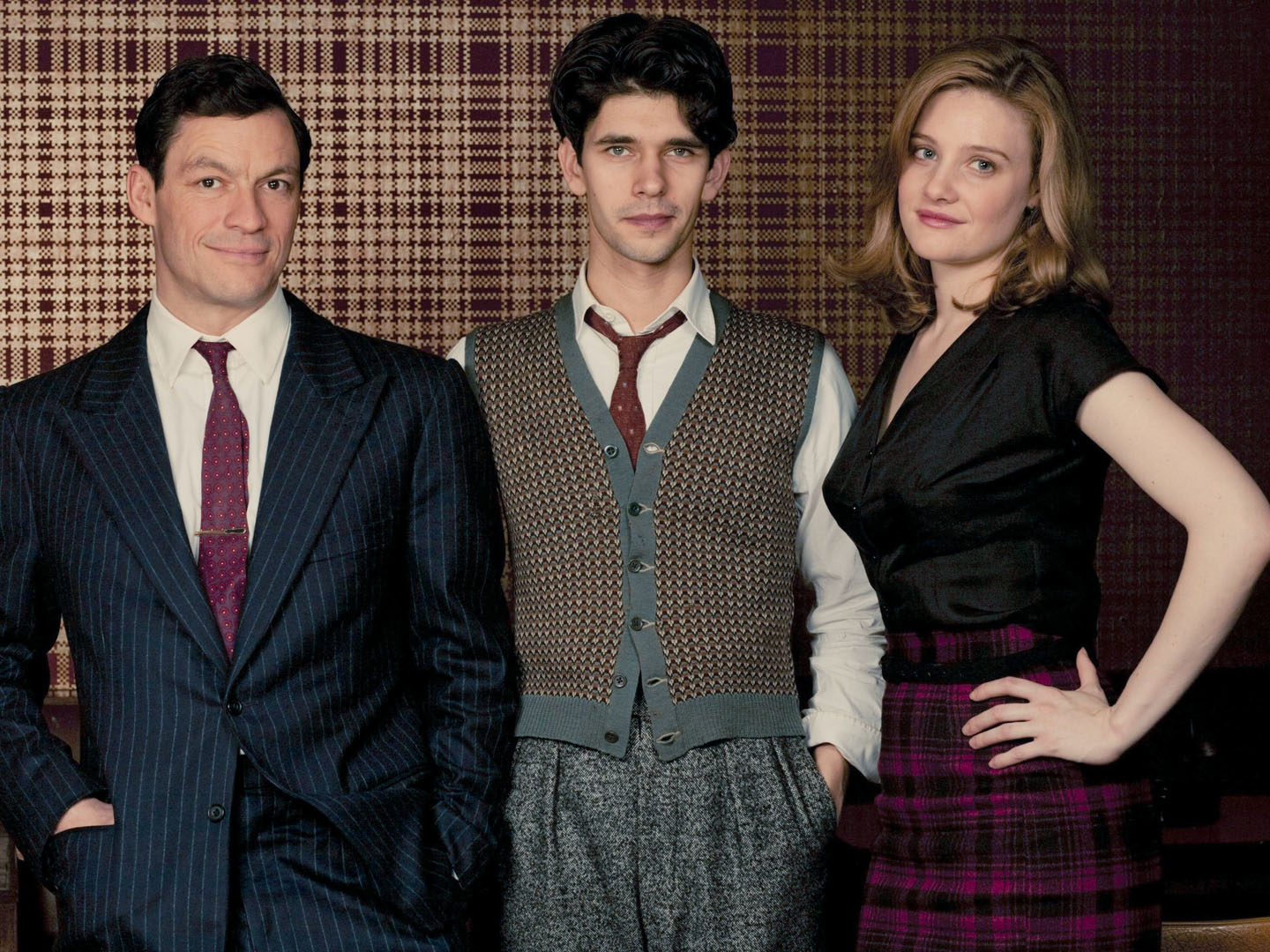 I love the way The Hour manages to integrate an obsessive attention to historical detail with a few necessary elements of romanticisation. They sourced period-specific pencils for the characters to use on set, but at the same time the basic concept of the show relies upon a 28-year-old woman being the producer of the BBC's flagship news programme. Obviously in 1956 this would be impossible but The Hour makes it effortlessly believable, and Bel's relationship with the two male leads -- Freddie the writer and Hector the presenter -- is the heart and soul of the show. As for historical detail, The Hour bears most of the hallmarks of a classic thriller about journalism, censorship and government conspiracies, and the topics Freddie and Bel investigate are very well chosen. The first season focuses on Cold War paranoia in London while the Suez Crisis rages on overseas, and I'm already obsessed with the amount of historical detail going in the background of season 2. Freddie, Bel and Hector are currently looking into corruption and vice in Soho, and we're already starting to see hints of Rachmanism and precursers to the Profumo Affair -- even though in 1957, all that was still unknown to the general public.
Tuesday, 27 November 2012
Master & Commander: The Far Side of the World. (Part 2)
Previously: Master & Commander, Part 1.
The characters in Master & Commander have a lot to say about the division between Navy and non-Navy sailors, whether it's out loud in dialogue or implicitly through their costuming. The final battle of the movie hinges upon the HMS Surprise being mistaken for a whaling ship, a ruse which is helped along by the recent addition of some former whalers to the crew. The idea of a Navy ship being neat and organised is so ingrained that their "disguise" is merely to seem messier and less competent than usual, and for the officers to wear brown oilcoats over their uniforms. For the everyday crewmembers, the task of upholding the image of the British Empire is to keep the ship running as cleanly and smoothly as possible; for the officers, it's to maintain an appearance of upstanding British aristocracy even in the middle of a storm.
 The finest example of the British Seafaring Gentleman archetype in Master & Commander is, surprisingly, not Captain Aubrey. In fact it's one of the midshipman, Peter Calamy. Calamy is the most well-respected of the midshipmen -- experienced enough to be a good leader, but still young enough to be idealistic. With his short hair, sideburns and long trousers he definitely falls into the category of the proto-Victorian gentlemen, and unlike the younger midshipmen he's relatively clean and kempt. By contrast, Aubrey looks a lot more 18th century and careworn, and has clearly relaxed with age. Most of his clothes are old and worn, and in private he regularly strips down to stained shirtsleeves and knee-breeches.
The characters in Master & Commander have a lot to say about the division between Navy and non-Navy sailors, whether it's out loud in dialogue or implicitly through their costuming. The final battle of the movie hinges upon the HMS Surprise being mistaken for a whaling ship, a ruse which is helped along by the recent addition of some former whalers to the crew. The idea of a Navy ship being neat and organised is so ingrained that their "disguise" is merely to seem messier and less competent than usual, and for the officers to wear brown oilcoats over their uniforms. For the everyday crewmembers, the task of upholding the image of the British Empire is to keep the ship running as cleanly and smoothly as possible; for the officers, it's to maintain an appearance of upstanding British aristocracy even in the middle of a storm.

Wednesday, 21 November 2012
Master & Commander: The Far Side of the World. (Part 1)
Master & Commander is #1 on my list of movies where I pine for a sequel. The thing is, even nine years on, they could still totally make one. The hope just makes it all the more painful, my friends. Master & Commander is so close to perfect that it even withstands the presence of Bach's Prelude for Cello in G, one of the most overused pieces of classical music in movie history. And as for the visuals, while M&C is mostly dominated by Naval uniforms, I find its costume
design to be far more satisfying than a hell of a lot of other
historical movies.
 As a war story with an all-male cast, Master & Commander is immediately predisposed to
look more realistic because in movieland, war + men = dirt =
authenticity. While men's costumes in period dramas are typically less showy than women's, they tend to be a lot more accurate because female characters are almost always idealised. Pirates of the Caribbean came out at around the same time as M&C, and while it's a Disney comedy about zombie pirates and therefore can be taken with a pinch of salt, it's still weird to see so many scenes where Keira Knightley looks immaculate while the male leads look like they haven't washed for a week. The female lead in a historical drama is expected to be alluring regardless of the state of everyone else, but the cast of M&C is made up of rugged, grime-spattered sailors who occasionally happen to be played by handsome movie stars. They even made the actors get their teeth stained in the name of historical authenticity, which I can pretty much guarantee has never happened to Keira Knightley in anything. Although in Master & Commander's defence, a 19th century Naval ship is one of the very few instances where it's legitimate for there to be zero female characters, so it doesn't actually bother me in that regard.
As a war story with an all-male cast, Master & Commander is immediately predisposed to
look more realistic because in movieland, war + men = dirt =
authenticity. While men's costumes in period dramas are typically less showy than women's, they tend to be a lot more accurate because female characters are almost always idealised. Pirates of the Caribbean came out at around the same time as M&C, and while it's a Disney comedy about zombie pirates and therefore can be taken with a pinch of salt, it's still weird to see so many scenes where Keira Knightley looks immaculate while the male leads look like they haven't washed for a week. The female lead in a historical drama is expected to be alluring regardless of the state of everyone else, but the cast of M&C is made up of rugged, grime-spattered sailors who occasionally happen to be played by handsome movie stars. They even made the actors get their teeth stained in the name of historical authenticity, which I can pretty much guarantee has never happened to Keira Knightley in anything. Although in Master & Commander's defence, a 19th century Naval ship is one of the very few instances where it's legitimate for there to be zero female characters, so it doesn't actually bother me in that regard.
 As a war story with an all-male cast, Master & Commander is immediately predisposed to
look more realistic because in movieland, war + men = dirt =
authenticity. While men's costumes in period dramas are typically less showy than women's, they tend to be a lot more accurate because female characters are almost always idealised. Pirates of the Caribbean came out at around the same time as M&C, and while it's a Disney comedy about zombie pirates and therefore can be taken with a pinch of salt, it's still weird to see so many scenes where Keira Knightley looks immaculate while the male leads look like they haven't washed for a week. The female lead in a historical drama is expected to be alluring regardless of the state of everyone else, but the cast of M&C is made up of rugged, grime-spattered sailors who occasionally happen to be played by handsome movie stars. They even made the actors get their teeth stained in the name of historical authenticity, which I can pretty much guarantee has never happened to Keira Knightley in anything. Although in Master & Commander's defence, a 19th century Naval ship is one of the very few instances where it's legitimate for there to be zero female characters, so it doesn't actually bother me in that regard.
As a war story with an all-male cast, Master & Commander is immediately predisposed to
look more realistic because in movieland, war + men = dirt =
authenticity. While men's costumes in period dramas are typically less showy than women's, they tend to be a lot more accurate because female characters are almost always idealised. Pirates of the Caribbean came out at around the same time as M&C, and while it's a Disney comedy about zombie pirates and therefore can be taken with a pinch of salt, it's still weird to see so many scenes where Keira Knightley looks immaculate while the male leads look like they haven't washed for a week. The female lead in a historical drama is expected to be alluring regardless of the state of everyone else, but the cast of M&C is made up of rugged, grime-spattered sailors who occasionally happen to be played by handsome movie stars. They even made the actors get their teeth stained in the name of historical authenticity, which I can pretty much guarantee has never happened to Keira Knightley in anything. Although in Master & Commander's defence, a 19th century Naval ship is one of the very few instances where it's legitimate for there to be zero female characters, so it doesn't actually bother me in that regard.Monday, 22 October 2012
SUPER IMPORTANT: Iron Man 3 promo pics.
This is the point where you lose all respect for me as a writer and an adult and a human because I'm posting about a) a trailer for a trailer, and b) a bunch of uninformative photos of superheroes standing around and looking at stuff. (N.B. Yes, a trailer for a trailer. Please direct your tears of frustration at Marvel, not me.)
 These promo pictures truly are a reassuring balm because thanks to them, we no longer have to worry that Iron Man wouldn't appear in Iron Man 3, or that Robert Downey Jr had suddenly become non-handsome. We can now rest easy in the knowledge that RDJ continues to be pleasurable to look at, and that at some point in this movie he puts on the Iron Man armour and fights something. I swear, superhero movie promotional material is more tightly controlled than press-releases from presidential campaign offices.

Tuesday, 9 October 2012
My continuing love-affair with the costume design of Revenge.
Click here to read previous Revenge reviews. Warning: This post contains unavoidable spoilers for the first two episodes of season 2.
I'm impressed by the way Revenge has transitioned smoothly from its original single-season arc to a more long-running format. With a specifically goal-oriented storyline like Emily's revenge plot I was worried that we'd end up in a Twin Peaks type situation with the writers frantically trying to pull new plotlines out of nowhere, but season two is already shaping up to be excellent. I don't see much point in discussing every little plot detail because there are just so many, but my favourite thing so far has been the way Victoria's resurrection was revealed almost immediately. Revenge is a soap opera at heart, but it's damn well-written, and I admire the decision to let Victoria out at the beginning of the season when a lesser show would surely have kept that secret hanging over half of the characters for much longer.
 The huge gap in Emily's backstory is a real gift to this show, particularly since it means we now get to see a whole bunch more of her Batman side. Batmanda is one of my very favourite parts of Revenge because watching intelligent women coolly brutalise their enemies makes my heart blossom like a flower. Sadly this storyline also comes with one of the worst aspects of the show, ie the two-dimensional racist stereotype that is Takeda, but fortunately it seems like his mentor role will be explored more thoroughly this season. Flashback scenes to her Batman training with Takeda are particularly interesting because she has such a radically different attitude towards him than she does towards anyone else in the show. In the Hamptons every person aside from Nolan is an unknowing pawn in her revenge plans, but Takeda is in the unique position of having Emily genuinely look up to him for guidance.
I'm impressed by the way Revenge has transitioned smoothly from its original single-season arc to a more long-running format. With a specifically goal-oriented storyline like Emily's revenge plot I was worried that we'd end up in a Twin Peaks type situation with the writers frantically trying to pull new plotlines out of nowhere, but season two is already shaping up to be excellent. I don't see much point in discussing every little plot detail because there are just so many, but my favourite thing so far has been the way Victoria's resurrection was revealed almost immediately. Revenge is a soap opera at heart, but it's damn well-written, and I admire the decision to let Victoria out at the beginning of the season when a lesser show would surely have kept that secret hanging over half of the characters for much longer.
Wednesday, 26 September 2012
The Bletchley Circle, Part 2: Costume Design.
Previously: The Bletchley Circle.
Historical dramas have a symbiotic relationship with costume design, with the clothes in high-profile shows like Downton Abbey receiving almost as much coverage as the stars. I suspect that this is one of the contributing factors to the popularity of historical movies about aristocrats, since it's a lot easier to interview Keira Knightley about corset logistics for the fiftieth time than it is to publicise a bunch of photoshoots of people wearing muddy pinafores and staid woollen caps. I love a good crinoline as much as the next girl, but sometimes movies about The Poors can be just as visually interesting because the costumes can illustrate more than just a statement of expense and luxury.
 Downton Abbey is the reigning queen of costume-design coverage because it just entered the 1920s, and fashion magazines looooove the 1920s. Downton is in an enviable position, costume-wise, because several of its main characters are real clothes-horses and are rich enough that it's believable for them to be agonisingly on-trend as the show inches forwards into the first years of "modern" fashion. Once you reach the mid-20th century, popular fashions begin to move fast enough that most viewers will know the time period without much need for scene-setting, whereas it would take a historian to tell the difference between, say, 1830 and 1850 based on visuals alone. The problem is that it's easy to get carried away with year-by-year trend accuracy, and forget that not everyone could or even want to be up-to-date with the very latest styles.
Historical dramas have a symbiotic relationship with costume design, with the clothes in high-profile shows like Downton Abbey receiving almost as much coverage as the stars. I suspect that this is one of the contributing factors to the popularity of historical movies about aristocrats, since it's a lot easier to interview Keira Knightley about corset logistics for the fiftieth time than it is to publicise a bunch of photoshoots of people wearing muddy pinafores and staid woollen caps. I love a good crinoline as much as the next girl, but sometimes movies about The Poors can be just as visually interesting because the costumes can illustrate more than just a statement of expense and luxury.

Monday, 17 September 2012
Elementary: characterisation, the unaired pilot, and its relationship to Sherlock Holmes canon.
Previously: From Arthur Conan Doyle to New York City's "Elementary": The Costume Design of Holmes and Watson.
Given the nature of Sherlock Holmes fandom, it's not entirely surprising that people were forming their opinions of Elementary and arguing about it before anyone had even seen the show. Some Holmes canon purists hated the fact that it was set in America; some fans of BBC Sherlock hated the idea of "another remake" so quickly on the heels of the British series. And people from both groups seemed irritated by the concept of a female Watson, prompting the first wave of backlash from pre-emptive Elementary fans who were determined to love it because Lucy Liu is awesome and sexism is bullshit. My own reaction to the early Elementary announcements was trepidation, partly because I didn't trust American network television to make a crime drama centering around a male/female relationship not be a romance. But since the showrunners had expressly put out statements to counteract this worry among Holmes fans, I decided to give it a go.
I should mention now that this post will contain some spoilers, although they won't be connected to the crime plot. The main focus of the episode was the fledgling relationship between Holmes and Watson, and to be quite honest the mystery/crimesolving aspects were not good. Even by the standards of long-running formulaic crime dramas like Bones or CSI it wasn't particularly interesting, and the vast majority of deductions made by Holmes were ones that could well have been made by the police. Not to mention the fact that it fell for the old crime-TV problem of there only being one believable suspect, ie "that one actor you kinda recognise". Which isn't to say that I'm giving the episode a negative review -- I just feel like the detective work never really approached the quality of the deductions in Holmes canon, or indeed in BBC Sherlock.
Given the nature of Sherlock Holmes fandom, it's not entirely surprising that people were forming their opinions of Elementary and arguing about it before anyone had even seen the show. Some Holmes canon purists hated the fact that it was set in America; some fans of BBC Sherlock hated the idea of "another remake" so quickly on the heels of the British series. And people from both groups seemed irritated by the concept of a female Watson, prompting the first wave of backlash from pre-emptive Elementary fans who were determined to love it because Lucy Liu is awesome and sexism is bullshit. My own reaction to the early Elementary announcements was trepidation, partly because I didn't trust American network television to make a crime drama centering around a male/female relationship not be a romance. But since the showrunners had expressly put out statements to counteract this worry among Holmes fans, I decided to give it a go.
 |
| (source) |
Monday, 10 September 2012
From Arthur Conan Doyle to New York City's "Elementary": The Costume Design of Holmes and Watson.
(This post is spoiler-free for CBS's Elementary.)
Like many Sherlock Holmes fans I had mixed feelings about the BBC's plan to make a modern-era Holmes adaptation, and was once again rather doubtful when CBS announced that they were going to film what sounded worryingly like Sherlock: New York City edition. But since BBC Sherlock won me over within about five minutes of its first episode, I decided to keep an open mind when it came to Elementary. I can understand people who don't like the idea of a US-set Holmes (particularly one that exists within the strictures of an episodic crime procedural), but I have no worries whatsoever regarding the casting of Lucy Liu as Watson. If Holmes and Watson are still platonic friends -- which the Elementary showrunners have already assured us will be the case -- then in a 21st century setting, it shouldn't matter that Watson is a woman. Will this be a close adaptation of Conan Doyle's vision? Probably not, but it isn't as if the existence yet another Holmes can retroactively damage any of the hundreds of other versions we have to choose from.
I was impressed to notice that even though all we've seen of Elementary so far are a few publicity shots and (in some cases, anyway) screener DVDs of the pilot episode, Holmes and Joan Watson already have very distinctive costuming styles. Most of the costume-related fan-commentary I've seen so far, though, is people expressing irritation at the apparent similarities between BBC Sherlock's famous coat and scarf, and the costume worn by Jonny Lee Miller during some scenes in the Elementary pilot. The two outfits are, I suppose, quite similar, but in general Elementary Holmes' styling couldn't be more different from BBC Sherlock's. And it's worth noting that Elementary takes place during autumn/winter in New York, so a thick coat and scarf aren't exactly out of place.
Like many Sherlock Holmes fans I had mixed feelings about the BBC's plan to make a modern-era Holmes adaptation, and was once again rather doubtful when CBS announced that they were going to film what sounded worryingly like Sherlock: New York City edition. But since BBC Sherlock won me over within about five minutes of its first episode, I decided to keep an open mind when it came to Elementary. I can understand people who don't like the idea of a US-set Holmes (particularly one that exists within the strictures of an episodic crime procedural), but I have no worries whatsoever regarding the casting of Lucy Liu as Watson. If Holmes and Watson are still platonic friends -- which the Elementary showrunners have already assured us will be the case -- then in a 21st century setting, it shouldn't matter that Watson is a woman. Will this be a close adaptation of Conan Doyle's vision? Probably not, but it isn't as if the existence yet another Holmes can retroactively damage any of the hundreds of other versions we have to choose from.
 |
| The PLAGIARISM SCARF in action. |
Wednesday, 22 August 2012
Costume design and movie/TV review masterpost.
Time to make Hello, Tailor more navigable! This blog has been going for almost a year now, and it's getting to the point where old posts are sinking down into the murk. I won't link to everything here, firstly because I'm lazy and secondly because I doubt anybody would be interested, but if you feel a real yearning for reviews of catwalk shows from six months ago then feel free to faff around with the tags until you find what you're looking for. Try stuff like fashion week for more general posts, or Spring 2012 for more specific timeframes. More recent fashion posts are also organised by designer, ie Chanel.
The basis for most of my TV/movie writing can be found in A fan's introduction to costume design, wherein I explain how and why costume design is more important than you think, and the ways in which costume design is often misjudged or misunderstood.

TV shows
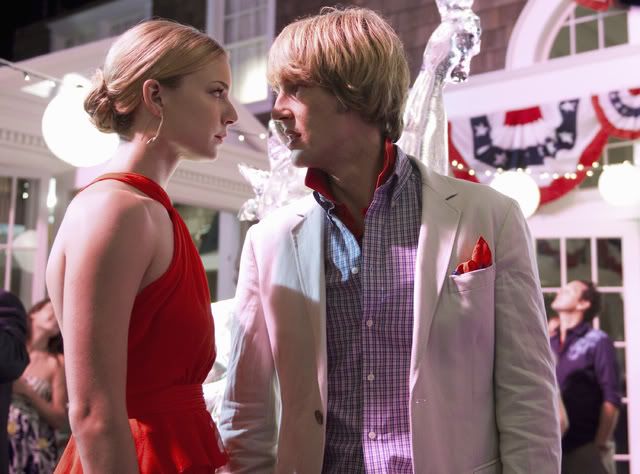
The Revenge tag should lead to all Revenge posts, beginning with New style crush: Nolan Ross in REVEEEENNNGGE.
The Teen Wolf tag should lead to all Teen Wolf posts, beginning with Teen Wolf 101: A guide to the eighth wonder of our world.
The Good Wife: Parenting Made Easy.
The Killing, and the iconic status of Sarah Lund's jumpers.
The most important thing about BBC Sherlock's "A Scandal In Belgravia".
Game Of Thrones: Unwashed Northerners, royal conspiracies, and decapitations all round.
The basis for most of my TV/movie writing can be found in A fan's introduction to costume design, wherein I explain how and why costume design is more important than you think, and the ways in which costume design is often misjudged or misunderstood.
TV shows
The Revenge tag should lead to all Revenge posts, beginning with New style crush: Nolan Ross in REVEEEENNNGGE.
The Teen Wolf tag should lead to all Teen Wolf posts, beginning with Teen Wolf 101: A guide to the eighth wonder of our world.
The Good Wife: Parenting Made Easy.
The Killing, and the iconic status of Sarah Lund's jumpers.
The most important thing about BBC Sherlock's "A Scandal In Belgravia".
Game Of Thrones: Unwashed Northerners, royal conspiracies, and decapitations all round.
Saturday, 11 August 2012
Links post: Test footage from Alien, jewellery by Salvador Dali, behind-the-scenes photos from The Hollow Crown, and more.
Alien: Test footage of the original xenomorph actor in Alien, Bolaj Badejo, has surfaced on youtube. A while ago one of my friends said that one of the good things about Prometheus was the fact that Ridley Scott could now afford to do something "better" than just have a really tall skinny guy wearing an alien costume, and I was like WASH YOUR MOUTH OUT. "Necessity is the mother of invention" is like the first commandment of movie costuming and special effects, and most of cinema's most impressive and sneaky tricks have been invented by people working on comparatively low-budget movies like Alien. In my opinion that tall skinny guy in an alien costume is still as creepy as all get-out, and certainly better than most CGI monsters up until very recent times.
Dali jewellery, 1950. From How To Be A Retronaut.

Kehinde Wiley. This artist paints strikingly intense, colourful portraits -- his homepage can be found here. I love the mixture of very modern contemporary models and this almost glowing, Renaissance-era background in some of the portraits.

Dali jewellery, 1950. From How To Be A Retronaut.

Kehinde Wiley. This artist paints strikingly intense, colourful portraits -- his homepage can be found here. I love the mixture of very modern contemporary models and this almost glowing, Renaissance-era background in some of the portraits.
Saturday, 4 August 2012
Links post: James Bond, Starfleet uniform bras, real-life Zoolander, and more.
There will be more image-heavy posts than usual this month because I'm at the Edinburgh Festival, working full time and going to shows most evenings. I don't have as much time as usual to write reviews but we should be back to regularly scheduled programming come September! A quick question for readers, though: It's been a few weeks since both The Dark Knight Rises and the final installment of The Hollow Crown were released -- is it worth it for me to post reviews for these in the next couple of weeks, or is it too late and/or already talked to death by other people?
The 10 best Bond outfits. Kind of baffled by this list, to be honest. Pierce Brosnan's rollneck jumper is an iconic 007 outfit? Really?

Handpainted Starfleet uniform bra. And by "Starfleet uniform" I don't mean regulation underwear. They come in Redshirt red, Command gold and Science blue, all with the Starfleet insignia, and you can even send your own bra off to get Starfleeted. I love Etsy. Or I would if I had any money.
The 10 best Bond outfits. Kind of baffled by this list, to be honest. Pierce Brosnan's rollneck jumper is an iconic 007 outfit? Really?
Handpainted Starfleet uniform bra. And by "Starfleet uniform" I don't mean regulation underwear. They come in Redshirt red, Command gold and Science blue, all with the Starfleet insignia, and you can even send your own bra off to get Starfleeted. I love Etsy. Or I would if I had any money.
Monday, 16 July 2012
The Hollow Crown: Henry IV Part 2.
Previously: Henry IV Part 2.
This post is gonna be wayyyyy less in-depth than the one I wrote for Henry IV Part 1 because nothing happens in this play. I'm serious. Maybe there was some heavy editing going on or something but as far as I can tell the only things that happen in Henry IV Part 2: Electric Boogaloo are:
It was like one of those situations when there's a really awesome, successful movie, and then someone's like, "OK, let's get a sequel up in this joint!" except instead of writing a whole new story they just erase most of the character development from the first movie and try to do it all over again a second time. Although this time round there's little to no plot, and the supervillain was defeated at the end of the last movie so instead of a battle there's just an awful lot of tragicomedy scenes involving an old fat conman slowly sinking into gout, despair and failure along with his new collection of comedy sidekicks. I don't know much about the circumstances surrounding the writing of this play, but I can easily imagine Queen Elizabeth writing to Shakespeare all, "More of this Falstaff fellow, my man! He makes one LOL!" and Shakespeare sobbing into his inkwell as he tries in vain to think up something interesting that happened to Henry V in the years leading up to his coronation.
This post is gonna be wayyyyy less in-depth than the one I wrote for Henry IV Part 1 because nothing happens in this play. I'm serious. Maybe there was some heavy editing going on or something but as far as I can tell the only things that happen in Henry IV Part 2: Electric Boogaloo are:
- Random soliloquays about how hard it is to be king.
- The world's greatest collection of Rude Mechanicals, indicating that "LOL, he's a women's tailor" is a joke that remains hilarious for 500 years.
- An extended sequence of Tom Hiddleston's oiled and gleaming torso.
- Sad Falstaff.
- The King is dead; long live the King.
 |
| "I just can't wait to be King!" |
Sunday, 8 July 2012
The Hollow Crown: Henry IV, Part 1.
Previously: The Hollow Crown: Richard II.
I was a little more prepared this time round because unlike with Richard II, I'd actually seen this play before. And, perhaps, Prince Hal's story is easier to follow than Richard's because he's a less ambiguous protagonist -- a character you can root for. Richard's flamboyant incompetence was entertaining to watch, but was distinctly unheroic. For all that Richard II was aesthetically pleasing, it didn't have the same gleeful excitement of Henry IV, with its clear-set coming-of-age journey for Prince Hal and its cast of crowd-pleasing comedy sidekicks. Falstaff's constant supply of old-fat-coward jokes may have been designed for an audience of 16th-century drunks, but I'm easily pleased and found him hilarious. (Possibly because I have the spirit of a 16th-century drunk.)
 Tom Hiddleson as Prince Hal was, put simply, totally awesome. I'd been looking forward to this play in particular both because I love Henry IV/Henry V story, and because Tom Hiddleston was clearly such brilliant casting. And having seen it? I'm now coming to understand why Tumblr is basically a giant online shrine to Tom Hiddleston. Within about fifteen seconds of him coming onscreen I had little hearts in my eyes like an anime character, like, what was even happening. Hiddleston's Prince Hal is so charming and handsome that I'm now desperate to see him play a genuinely unappealing character. Because, you know, the only other thing I've really seen him in is his role as Loki in Thor and The Avengers, who despite being a villain is still pretty lovable. I found myself comparing the two, and the one thing that stands out between them is Hiddleston's ability to play royalty. The level of automatic, commanding entitlement both Loki and Hal display is wonderful, although they show it in very different ways.
I was a little more prepared this time round because unlike with Richard II, I'd actually seen this play before. And, perhaps, Prince Hal's story is easier to follow than Richard's because he's a less ambiguous protagonist -- a character you can root for. Richard's flamboyant incompetence was entertaining to watch, but was distinctly unheroic. For all that Richard II was aesthetically pleasing, it didn't have the same gleeful excitement of Henry IV, with its clear-set coming-of-age journey for Prince Hal and its cast of crowd-pleasing comedy sidekicks. Falstaff's constant supply of old-fat-coward jokes may have been designed for an audience of 16th-century drunks, but I'm easily pleased and found him hilarious. (Possibly because I have the spirit of a 16th-century drunk.)

Sunday, 1 July 2012
The Hollow Crown, Part 1: Richard II.
Caveat: I am no Shakespeare scholar. I come at Shakespeare from the perspective of a pop-culture nerd, meaning that when I lived in London I was the person getting weird looks from the ushers at the Globe Theatre because I'd be all like, "No, don't give me a programme! I don't want spoilers!" Spoilers for King Lear, that is. I get why some people like to read plays before they see them, but I wouldn't read the script of The Avengers before seeing that so why should Richard II be any different? Usually this works out fine as long as I pay attention to the performance, although I did have some trouble the other week when I went to see Alan Cumming's one-man Macbeth, which was kinda hard to follow because, you know, he was playing all the roles. Fortunately I'm Scottish, and all Scottish people are forced to memorise the plot of Macbeth while being beaten with birch twigs and standing on a blasted heath at midnight as a rite of passage, which certainly comes in very useful in situations like this.
 The other problem facing me when embarking upon the first installment of the BBC's Hollow Crown series was a complete lack of knowledge about the Wars of the Roses. I'm pretty sure that the Wars of the Roses are a History class staple in England, but Scottish education system tends to concentrate more on the Reformation, mostly for practical reasons because people in Scotland still get into barfights on a semi-regular basis about things that happened during the Reformation. I watched Richard II with a group of Scots and even though we had at least one History degree among us, we still weren't 100% certain whether Richard II took place in the 14th or 15th century until we wikipedia'd it afterwards. (N.B. Watching Shakespeare's English History plays in a roomful of Scots is ideal because the entire plot revolves around English people killing each other, which gives us all a schadenfreude thrill.)
 As soon as Richard showed up I knew I was going to love him. I'd never seen Ben Whishaw in anything before, but I can now go on record to say that he's my new #1 casting choice for any roles that require a slimy, effeminate dweeb to Gaius Baltar his way around all the other characters while flopping onto furniture and sobbing about how misunderstood he is. A+ KINGING, BEN WHISHAW.
 As soon as Richard showed up I knew I was going to love him. I'd never seen Ben Whishaw in anything before, but I can now go on record to say that he's my new #1 casting choice for any roles that require a slimy, effeminate dweeb to Gaius Baltar his way around all the other characters while flopping onto furniture and sobbing about how misunderstood he is. A+ KINGING, BEN WHISHAW.
 Friday, 22 June 2012
Costume design and the crew of the Prometheus.
Costume design is the point where my positive and negative feelings about Prometheus intersect. The visuals of this movie were amazing, but at the same time I'm of the opinion that almost every reference that directly connected Prometheus to Alien was handled very poorly. I've already written about how the decision to make Prometheus into a glossy sci-fi epic and attempt to overtly tie it to Alien was a mistake, and costume design was definitely one of the details that should have been used to distance Prometheus from Alien, not bring the two together.
This interview with costume designer Janty Yates touches upon the fact that while the spacesuits in Prometheus were designed to look very different from those in Alien, the indoor/casual clothes were intentionally similar to the costumes worn by the crew of the Nostromo. Which, to me, immediately seems like a bad idea. The waking-up/breakfast scene in Prometheus is already similar enough to the one in Alien that it's a comfortably direct reference, but aside from the basic scene-setting they should have avoided any other similarities because the premise and setting of the two movies are so fundamentally different. Although the two films share the same discovery-thriller structure and pacing, the crews are different people with very different aims in mind. The Nostromo was a beat-up old mining ship, crewed by experienced blue-collar workers who treated each other with friendly, professional wariness; the Prometheus is a brand new, hugely expensive exploration vessel, crewed by academics, businesspeople, and some expert pilots and security staff. The idea of these two casts of characters looking similar makes no sense at all.
 |
| In space, all food is brightly-coloured and comes served in Muji containers. |
Monday, 4 June 2012
Snow White & The Huntsman: The prince doesn't get the girl; the girl gets the kingdom.
Previously: Snow White & The Huntsman: How to tell a fairy story.
Thanks to last week's new releases, my Charlize Theron viewing history is now all the way up to three films total. (The first was Aeon Flux, which, yeah, ask me about that sometime. It's the worst.) I won't be posting a review of Prometheus until it's been out for a little longer, but the one thing I will say is that if you're planning on seeing it, you should read this (non-spoilery) warning first. Following the advice therein will, I think, improve your Prometheus experience.
 I was very excited about Snow White & The Huntsman because the marketing was so gosh-darned appealing (surprisingly so, considering the content and audience) and I am of the opinion that Kristen Stewart and Charlize Theron should be the next Bogart and Bacall. Unfortunately, SWATH was nowhere near as good as I expected, dragging on longer than it should have done and including several completely superfluous characters. In some respects it succeeded (ie, visual effects and Awesome Ladies, both of which featured prominently in the trailer) but the end result was an action movie that could've done with more action, and a drama that needed tighter drama.
Thanks to last week's new releases, my Charlize Theron viewing history is now all the way up to three films total. (The first was Aeon Flux, which, yeah, ask me about that sometime. It's the worst.) I won't be posting a review of Prometheus until it's been out for a little longer, but the one thing I will say is that if you're planning on seeing it, you should read this (non-spoilery) warning first. Following the advice therein will, I think, improve your Prometheus experience.

Thursday, 31 May 2012
The costumes and characters of The Avengers: Black Widow and Hawkeye.
Previously: Check the Avengers tag for other Avengers-related costume review posts.
OK, fair warning: This one is going to be a Haters To The Left post. Of all the Avengers, Hawkeye and Black Widow are the ones most likely to be sidelined as being supposedly less valuable than heavy-hitters like Iron Man and Thor. This kind of statement usually stems from the fact that they're the least superheroic of the Avengers, the implication being that if you don't have a jet-propelled robot suit or the ability to punch someone through a wall, you have less worth. In addition to being idiotic, claims like this are Not A Good Message For The Kids. This maye be a superhero movie, but it's also a story about teamwork, and the reason why SHIELD puts together a team instead of an army is because different people bring different skills to the table. This may seem like kind of a no-brainer, but from what I've read of many people's reactions to the film, it apparently needs to be said.
 Black Widow got a truly ridiculous amount of criticism, both from professional reviewers and from mundane fans, but most of it seemed to be down to thoughtless sexism. If anything, Hawkeye was the weaker link of the team. Not because he's a "normal human" or because he got taken down by Loki (an event that was integral to the plot) but because he gets far, far less screentime in his own right than the other Avengers. For the bulk of the movie he's either under mind control or in the midst of an action scene, and the only real moment of Clint Barton time is his scene with Black Widow just after he's woken up. I'd actually classify him as filling something akin to the girlfriend/damsel role in Black Widow's character arc -- a person she cares about and feels she has to save, allowing the audience to learn about her Dark Past in the process. Like the love-interest or bus of innocent children that Batman or Superman has to wrest from the clutches of their villain of the week, Clint is the person who reveals Black Widow's emotional frailties and strengths.
OK, fair warning: This one is going to be a Haters To The Left post. Of all the Avengers, Hawkeye and Black Widow are the ones most likely to be sidelined as being supposedly less valuable than heavy-hitters like Iron Man and Thor. This kind of statement usually stems from the fact that they're the least superheroic of the Avengers, the implication being that if you don't have a jet-propelled robot suit or the ability to punch someone through a wall, you have less worth. In addition to being idiotic, claims like this are Not A Good Message For The Kids. This maye be a superhero movie, but it's also a story about teamwork, and the reason why SHIELD puts together a team instead of an army is because different people bring different skills to the table. This may seem like kind of a no-brainer, but from what I've read of many people's reactions to the film, it apparently needs to be said.

Thursday, 10 May 2012
The costumes and characters of The Avengers. Part 2: Tony Stark, Pepper Potts, and Bruce Banner.
Previously: The costumes and characters of The Avengers. Part 1: SHIELD.
From my limited knowledge of Avengers comics canon I was expecting the movie to focus more on the clash of personalities between Steve Rogers and Tony Stark, but the genius of The Avengers was that it explored all these different permutations of the Avengers team that I'd never considered before. The best example of this was the unexpectedly perfect combination of Bruce Banner and Tony Stark. The most poorly-handled character of the Marvel universe thus far -- the Hulk's human alter-ego -- ended up with the most engaging hero's journey in the film.
 With two Iron Man movies already under his belt (plus the fact that Robert Downey Jr's media presence is practically indistinguishable from Tony Stark in real life) Tony is the most established character in The Avengers. Audiences are guaranteed to recognise him, and unlike the rest of the Avengers team he's both familiar with SHIELD and with the business of dealing with major, public threats as a superhero. To me it seemed like Tony was the most grounded of the heroes, which was quite a turnaround from the myriad of self-sabotaging insecurities he displayed in the Iron Man movies. And that's partly down to the fact that this time round, the "public" Tony Stark is almost entirely absent.
From my limited knowledge of Avengers comics canon I was expecting the movie to focus more on the clash of personalities between Steve Rogers and Tony Stark, but the genius of The Avengers was that it explored all these different permutations of the Avengers team that I'd never considered before. The best example of this was the unexpectedly perfect combination of Bruce Banner and Tony Stark. The most poorly-handled character of the Marvel universe thus far -- the Hulk's human alter-ego -- ended up with the most engaging hero's journey in the film.

Subscribe to:
Posts (Atom)